Vol. 124 KitKat: Heist intrigue 🍫
How KitKat turned a pre-Easter chocolate heist into a PR victory
21 Apr 2026
Vol. 124 KitKat: Heist intrigue 🍫
How KitKat turned a pre-Easter chocolate heist into a PR victory

Case Studied by Vendry
April 21, 2026

Case Studied
Stolen sweets in the spotlight
Supply chain disruptions are generally not a positive for the companies involved. But certain brands manage to cleverly lean into it.
We saw KFC do this in 2018 when it had to temporarily shut down restaurants in the UK because they ran out of chicken. With their agency Mother, KFC ran two ads in UK newspapers that rearranged the letters in the chain’s acronym to “FCK,” which generated widespread earned media coverage.
Just before Easter, we saw KitKat take a page from the same book.
This week, Case Studied explores how KitKat turned a pre-Easter chocolate heist into a PR win.
The Brief
KitKat is one of the most recognized candy bars in the world. Owned by Nestlé, the brand has been around since 1935 and is sold in over 100 countries. Its tagline—"Have a break, have a KitKat"—is one of the longest-running slogans in advertising history.
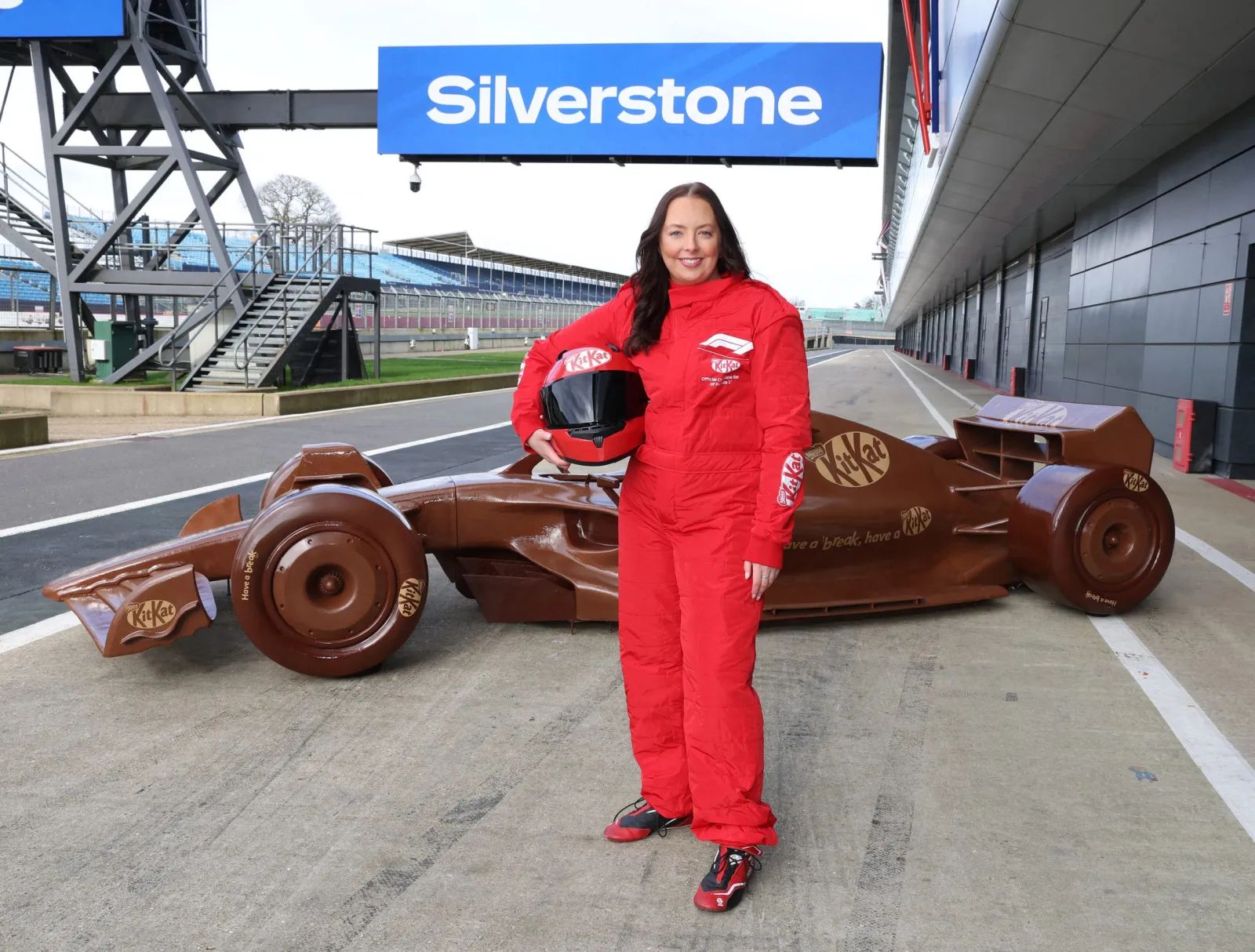
Fast forward to 2025 and KitKat hit a new milestone: it became the official chocolate bar of Formula 1. The brand launched the partnership during F1's 75th anniversary and KitKat's 90th. To mark the collaboration, the brand unveiled the first-ever life-sized chocolate-molded F1 race car built by master chocolatier Jen Lindsey-Clark. This initial initiative set the tone that KitKat was clearly invested in making its F1 partnership feel like more than just a logo slap.
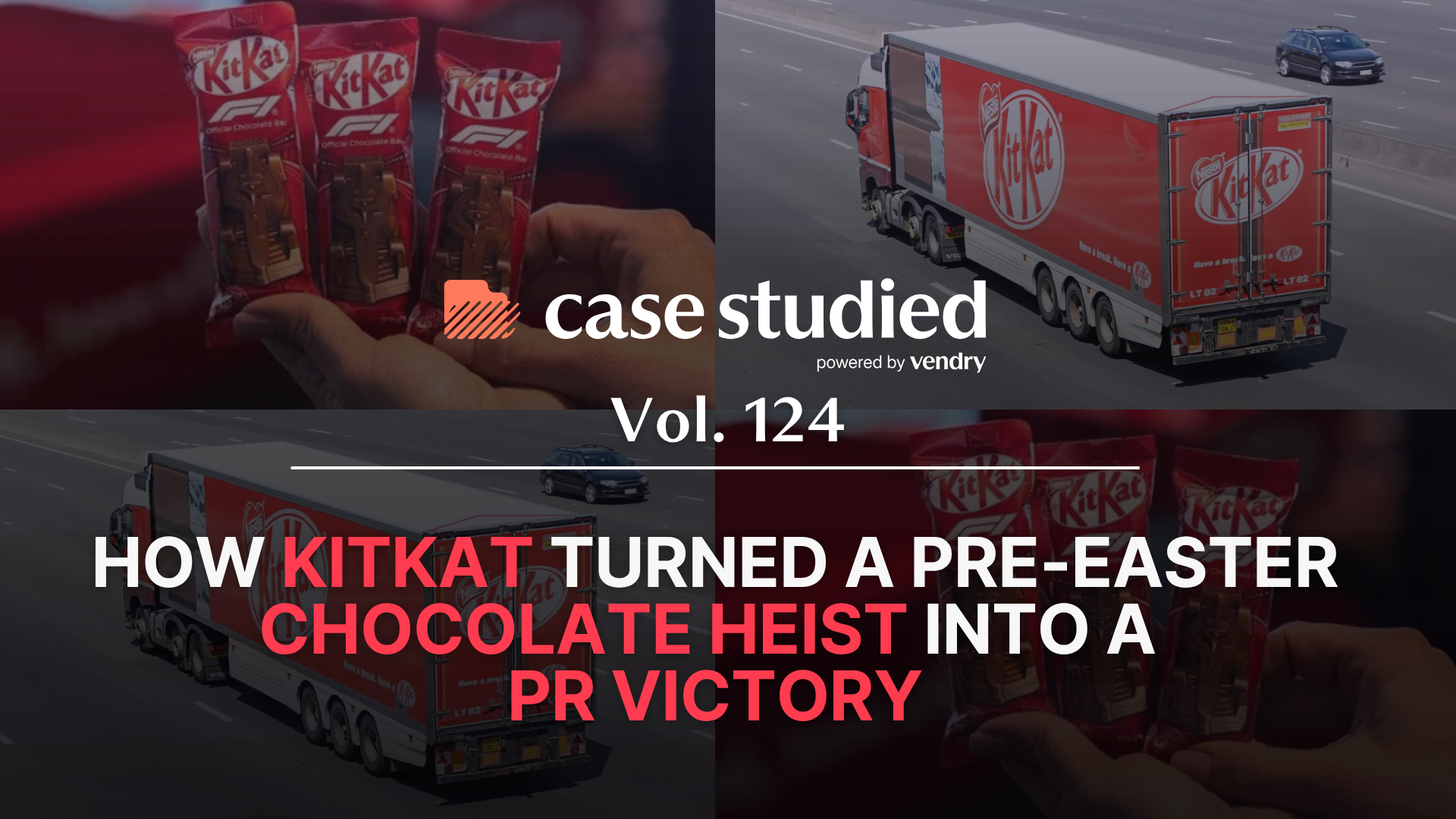
The partnership went on to produce a limited-edition product: a KitKat bar molded into the shape of a miniature Formula 1 race car. These bars were produced at a Nestlé factory in central Italy and were being shipped to markets across Europe ahead of the racing season (March through December).
That brings us to March 26, 2026 when a truck carrying 413,793 of these mini F1 race car bars was intercepted somewhere between the factory and its destination in Poland. No one was hurt but 12 metric tons of chocolate was stolen and the vehicle was not recovered.
The Execution
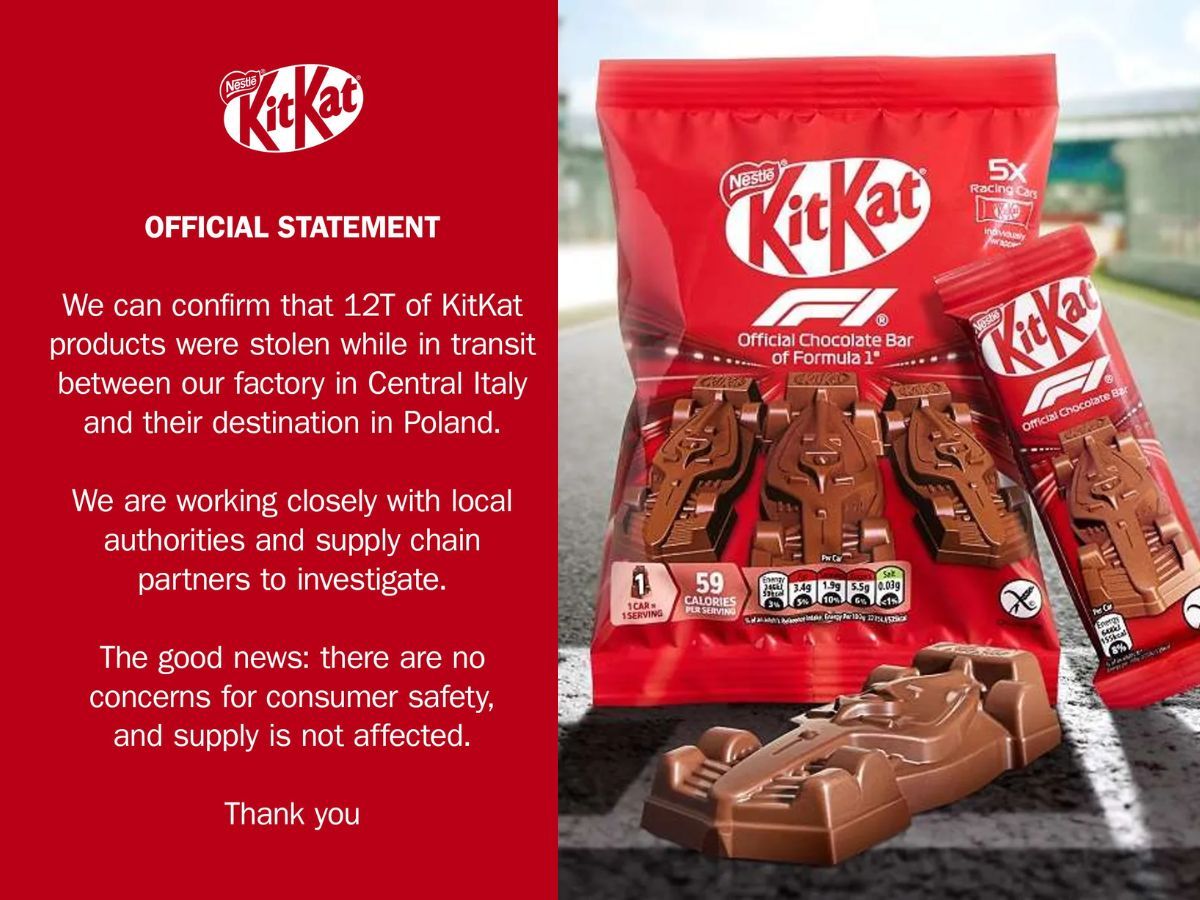
KitKat's response to this chocolate heist was fast. Nestlé went public three days after the theft with a statement posted across KitKat's official social media channels.
The statement set the tone for everything else that followed. It read, "We've always encouraged people to have a break with KitKat—but it seems thieves have taken the message too literally and made a break with more than 12 tonnes of our chocolate." The brand added that it appreciated "the criminals' exceptional taste."
From there, memes quickly spread across X and Instagram. Other brands like Irish airline Ryanair and Domino's Pizza jumped into the conversation with their own riffs, generating hundreds of thousands of additional likes across platforms.
Then on April Fools' Day, KitKat launched the "Stolen KitKat Tracker." This online tool let customers enter the 8-digit batch code on the back of any KitKat package to find out whether their bar was part of the stolen shipment. The tracker announcement racked up nearly 100,000 likes on X within hours.
KitKat posted a follow-up statement the same day: "Thank you for your interest in the missing KitKats. But just to clarify, this is not a stunt or an April Fool's joke. Someone really stole 12 tonnes of KitKats. And we really want to know where they've gone."
That insistence combined with the timing of everything raised some eyebrows. Days before Easter, there’s a viral story about stolen limited-edition products. Then on April Fools' Day, a branded tracking tool is launched. It’s all very tidy—a little too tidy for some observers.
Meanwhile, Italian authorities said they are investigating the heist and focusing on organized crime known for high-value cargo theft. Nestlé (for now) maintains the theft was genuine.
The Results
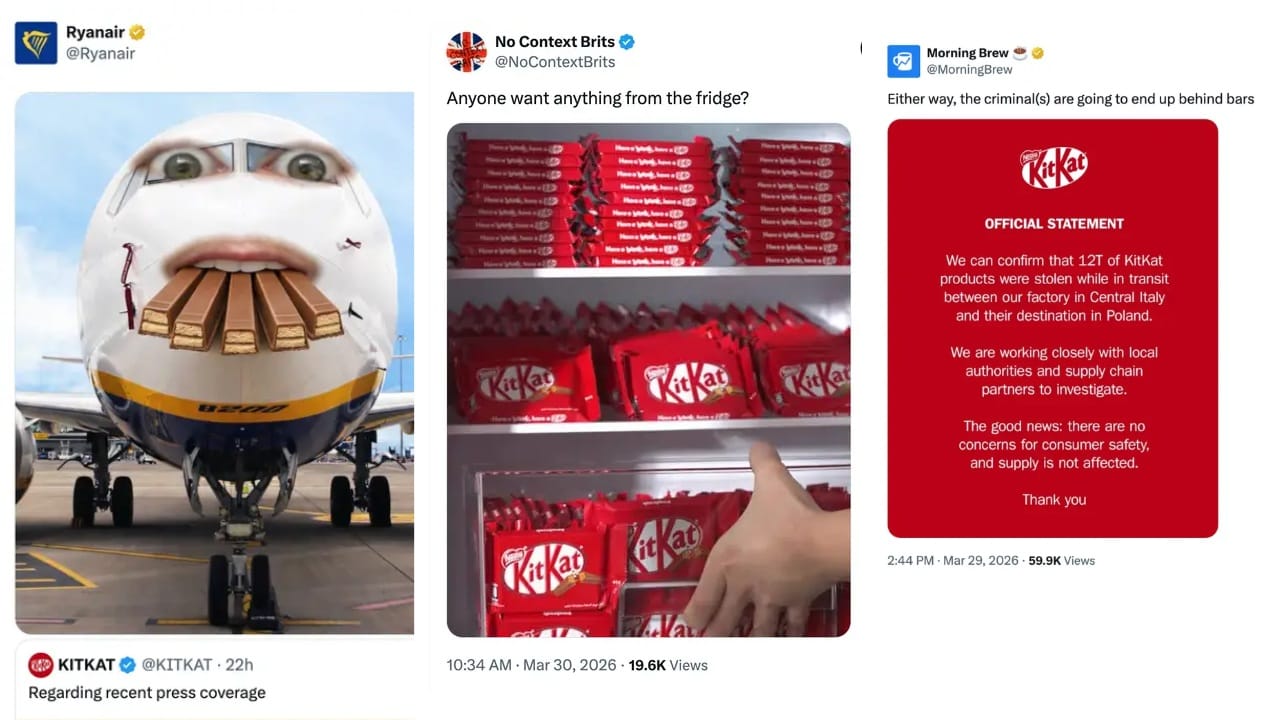
The post KitKat made on March 29 confirming the theft garnered over 333,000 likes on X and 340,000 on Instagram. Coverage of the crime spread quickly across outlets including CBS, NBC, The Guardian, Fast Company, Forbes, and more.
KitKat's social posts from the period became some of the brand's highest-performing content ever. The viral lift was compounded by other brands jumping into the conversation.
The Stolen KitKat Tracker also became its own media moment, with publications covering the tracker as a story separate from the heist.
A Reddit thread dedicated to the incident accumulated over 4,000 upvotes, with commenters largely taking a lighthearted view: "Honestly sounds like the most 'harmless' heist of the century," one wrote.
KitKat declined to share specific sales data tied to the heist response. A spokesperson told Fast Company: "We are actually positively surprised by the level of online engagement, and grateful that so many people are keen to support us."
The average agency search takes 8–12 weeks. Between writing the brief, sourcing candidates, reviewing pitch decks, negotiating scope, and onboarding - Q4 is over before the work even starts. And so are your end-of-year numbers.
Vendry compresses your agency search to under 7 days:
Free for brands - agencies cover the cost, not you
Curated shortlist pulled from 4,000+ vetted agencies across every marketing discipline
Managed RFP process — we write the brief, source the fit, and coordinate intros
Trusted by Shopify, Coca-Cola, Burt's Bees, Columbia Records, ZScaler, and Magic Spoon
Zero cold outreach from agencies you didn't ask to hear from
No lock-in - you only move forward if the fit is right
Skip the months of back-and-forth. Get a shortlist that actually matches your budget, vertical, and timeline… and still hit your Q4 targets.
The Takeaways
1) Stay on-brand, even in crisis management.
When news of the theft broke, KitKat moved quickly with a very aligned response. The statement they put out didn't read like a crisis statement written by a PR firm and approved by a team of corporate lawyers. It sounded like what you’d expect from the KitKat brand. The "Have a Break" callback and the line about appreciating the criminals' "exceptional taste" were clear examples of brand voice.
When something unexpected happens, your instinct may be to go into defensive mode. But if your brand has a clear, consistent brand voice, that’s exactly what you should lean into. Ideally, you’ll never have to deal with that but if things do go awry, look at your crisis management strategy with the same glasses you’d look at a campaign brief.
2) Recognize when humor is (and isn't) appropriate.
KitKat's wit worked well here because the situation was low-stakes. No one was hurt in the heist, supply wasn't affected, and the stolen product was chocolate. The playful tone fit the moment. But that same response would have landed very differently if there had been safety concerns, major company disruptions, or if the products involved were essential and/or life-saving.
Before reaching for a clever line in a crisis, do a quick gut check on the stakes. Humor is a powerful tool for brand communications, but it's also one of the easiest to misuse. This is an area where it’s helpful to lean on agency partners who offer external perspective, especially when your team is in the crisis management weeds.
3) Have a crisis playbook ready before you need it.
KitKat's response was fast and on-brand, which suggests some degree of preparation (or intentional planning… time will tell). Brands that fumble crisis moments often do so because they lack a process. There’s no clear chain of approval, no pre-agreed tone, or no sense of who owns the response. That can lead to responses that are either too hasty or too late.
Before a crisis hits, map out the basics. Who approves messaging? What does your brand voice sound like under pressure? How quickly can your team realistically move? It can be a lot less stressful to have those conversations proactively rather than reactively. Plus, the brands that respond well in moments of crises are usually the ones that mapped out their process in advance.
End the search: Vendry makes it simple to find your next agency partner. Share your needs and get connected with vetted, top-tier options in under a week—at no cost to you.
Don't miss the next Case Studied™.
Join 40,000+ marketers and receive a breakdown of the world's best brands every week.