The marketing moves that defined the week
Hudson Williams, Dove’s OOH, and a $218 billion Google problem
16 Apr 2026
The marketing moves that defined the week
Hudson Williams, Dove’s OOH, and a $218 billion Google problem

Case Studied Brief
April 16, 2026
Case Studied Brief
Brands hit Coachella, Disney cut jobs, and Google got served
This week's Brief covers brands tapping into celebrities, big mergers facing scrutiny, and folks who packed up their desks.
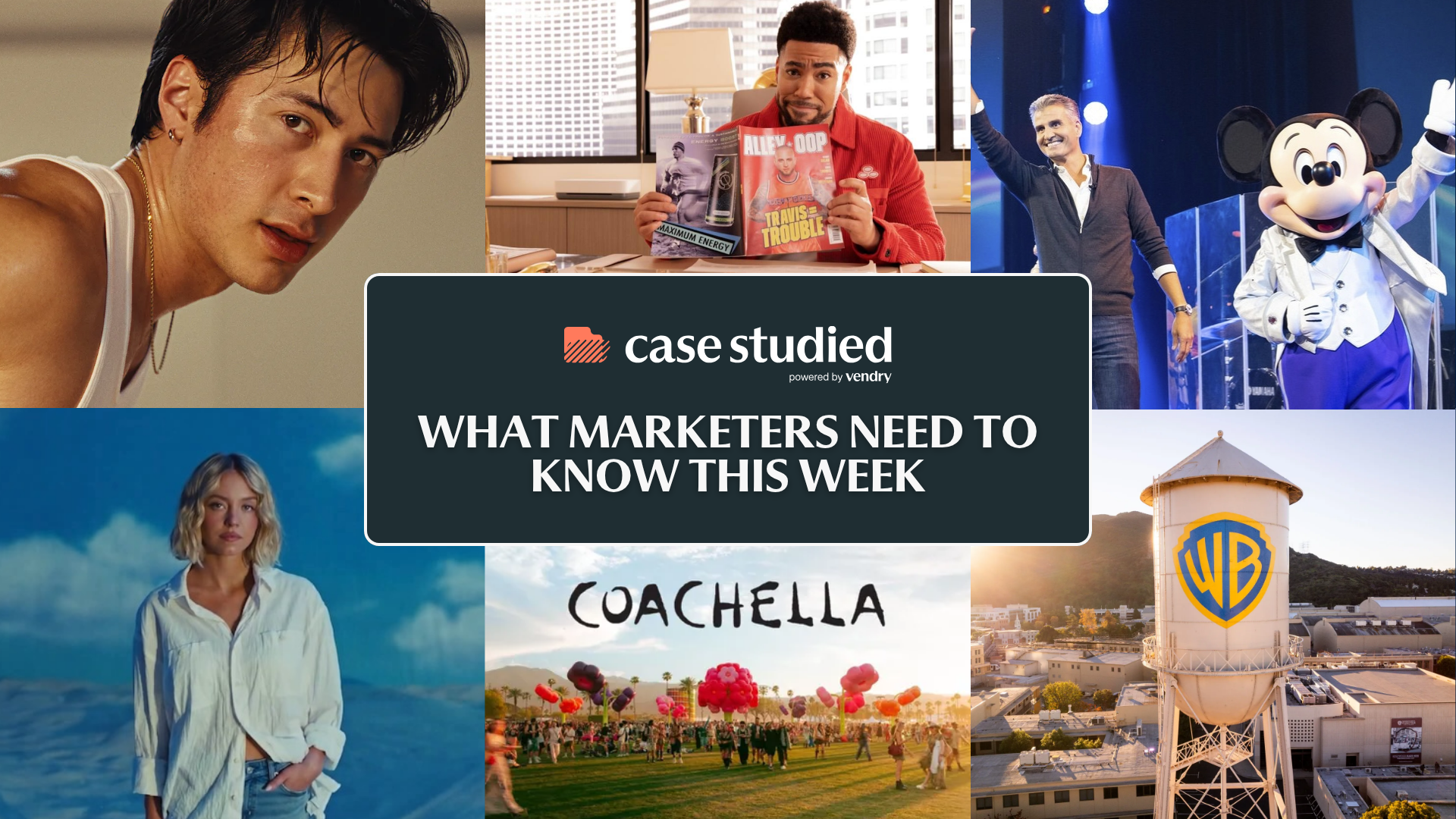
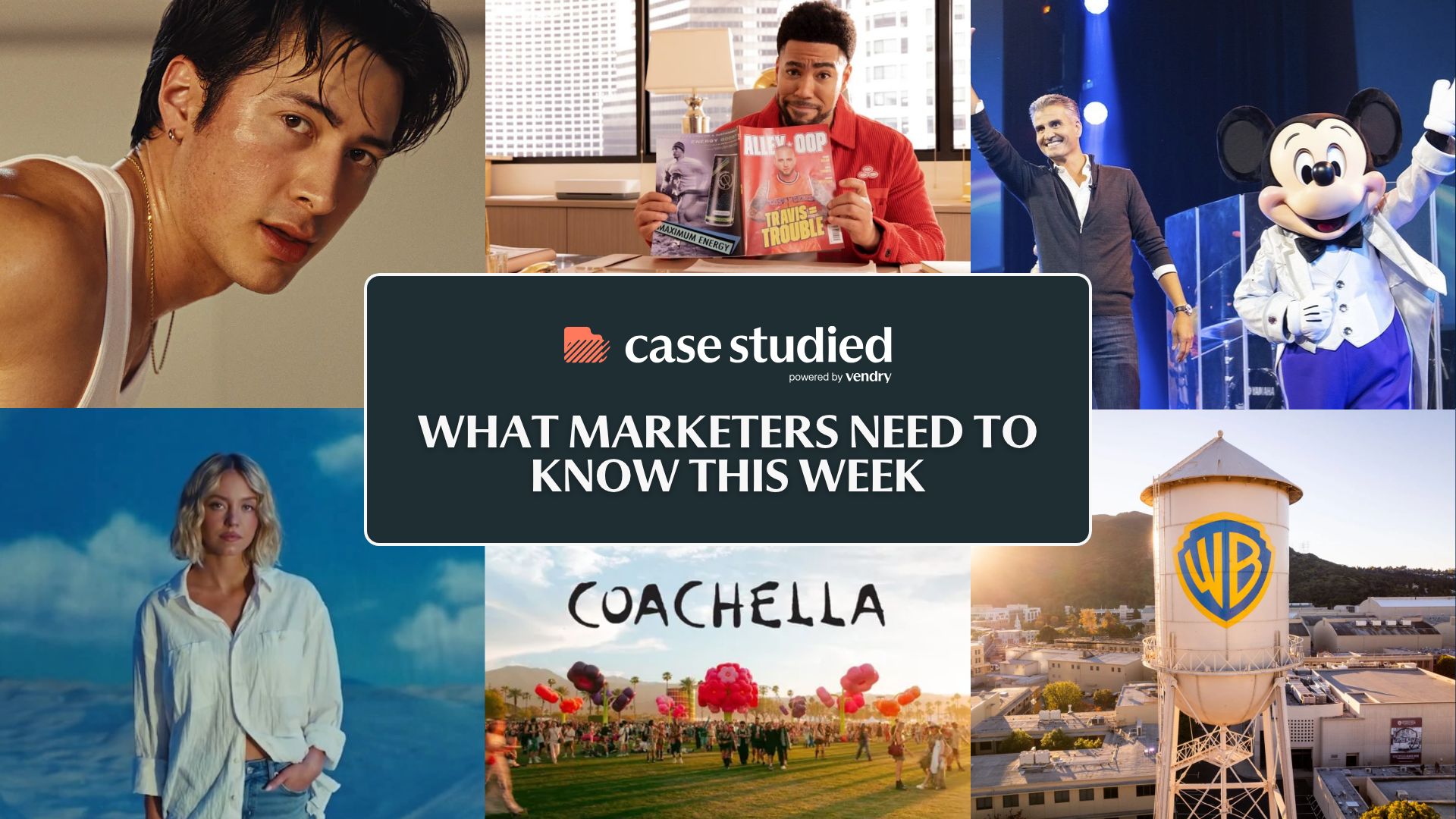
American Eagle launched another campaign with Sydney Sweeney. Jake from State Farm is coming to Netflix. And Dove built a vending machine of faces.
Meanwhile, Disney cut marketing jobs, advertisers filed mass arbitration claims against Google, and the Paramount x Warner Bros. merger saw its latest twist.
Here's what you need to know.
Campaigns of the week 📺
Peloton
Peloton gives permission to let go with Hudson Williams
Peloton tapped Heated Rivalry star Hudson Williams as the new face of its latest campaign. Titled "Let Yourself Go," the campaign was developed entirely in-house under CMO Megan Imbres. It moves the brand away from its intense, performance-driven identity toward something more relaxed and lifestyle-oriented. Directed by Bethany Vargas and choreographed by Tyrik Patterson, the 60-second hero film shows Williams walking, strength training, and doing a full dance break set to David Bowie's "Fame." The brand that once sold itself on the idea of sacrifice and painstaking struggle has pivoted to the idea of showing up and enjoying the ride.
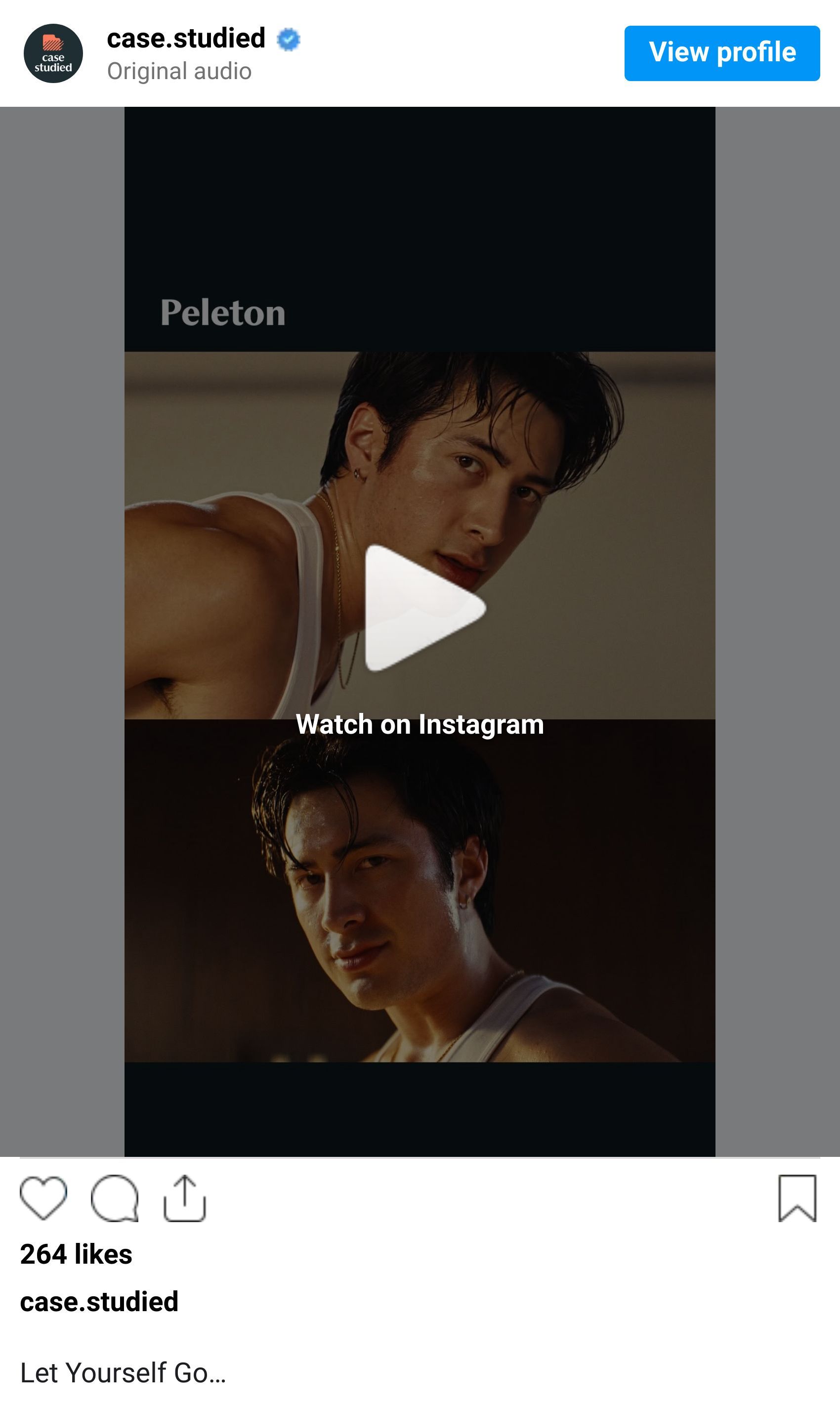
Why it stood out: By casting Williams, Peloton is leaning into the actor's breakout success to help reignite consumer demand. Williams is riding a wave of global attention from Heated Rivalry and attaching to that momentum can be an effective way to grab attention. The deeper play here is the brand identity reset, which the brand clearly needed after years of turbulent headlines and declining sales.
📖 Read more: Ad Age
Dove
A beauty vending machine full of the same face
Dove installed a vending machine at London's Waterloo Station that was designed to mimic the way social media algorithms set unrealistic beauty standards. Called "The Beauty Machine", the vending machine appeared to offer a variety of faces but in practice, it only dispensed the same algorithmically optimized one. The activation was created with agency Ogilvy and Emmy-winning documentary filmmaker and photographer Lauren Greenfield. It was backed by findings from Dove's State of Beauty report that showed 1 in 2 women and girls in the UK feel pressured to change their appearance. Passersby were invited to an open casting call to share their natural, unfiltered beauty. Within 48 hours, images from the casting call appeared on billboards across the station.
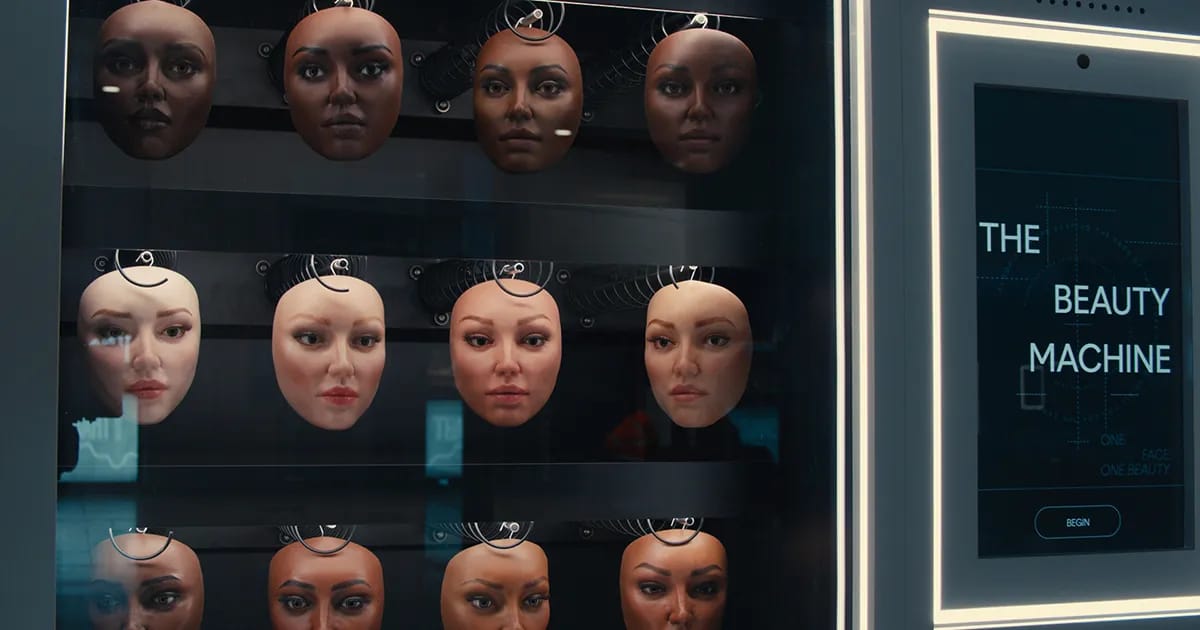
Why it stood out: Dove has been challenging the issues around beauty standards for over 20 years with their Real Beauty campaign. This latest iteration took algorithmic bias—something inherently abstract—and turned it into a physical experience people could stand in front of and interact with. For marketers, it’s worth taking note of the ways Dove sustains this 20+ year initiative. The State of Beauty report provides insights, those insights inform their strategy, and their strategy drives creative and campaigns forward.
📖 Read more: AdWeek
American Eagle
American Eagle brought Sydney Sweeney back
American Eagle launched a new summer campaign featuring Sydney Sweeney called "Syd for Short." The brand is doubling down on a partnership that saw significant backlash over its "Great Jeans" campaign in 2025 (though it also generated 40 billion media impressions). The new campaign shifts the tone to be lighter and more self-aware. In the 15-second hero spot, Sweeney asks "What brand am I wearing?" before answering with a laugh "Yeah, that one." The campaign launch coincides with the Euphoria Season 3 premiere, which Sweeney stars in. American Eagle CMO Craig Brommers called the timing a fortunate but unplanned coincidence.
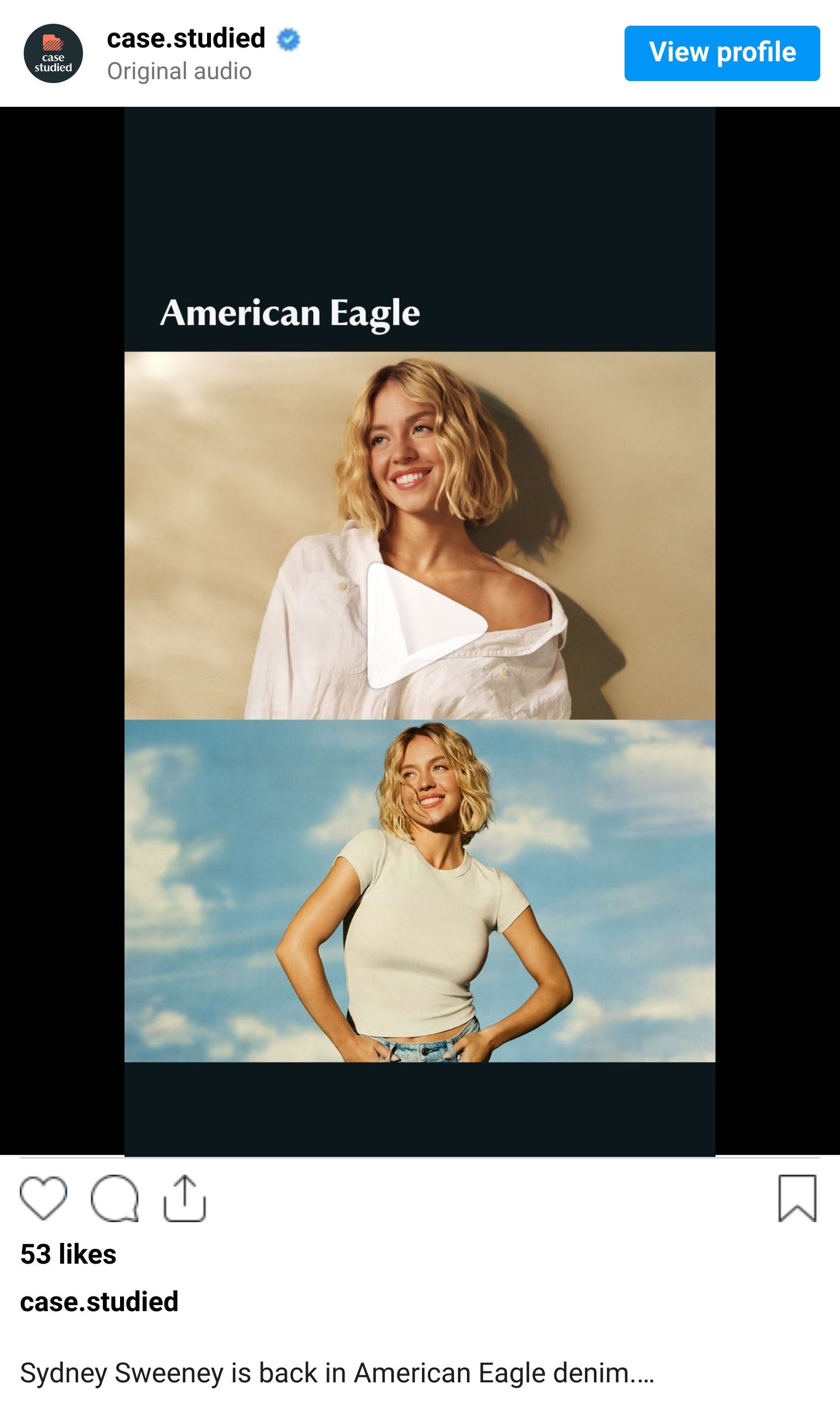
Why it stood out: American Eagle's decision to double down on the Sweeney partnership is rooted in data. Despite widespread criticism, the “Great Jeans” campaign was the most commercially successful in the brand's history. This latest iteration also follows a record fourth quarter for American Eagle that saw denim sellouts and new customer acquisition hit all-time highs. In a climate where brands routinely fold under online pressure, American Eagle chose to pivot and keep the partnership moving.
📖 Read more: American Eagle
Exclusive Subscriber Perk
Curious who runs agency RFPs for Fortune 500 brands (for FREE)?
Spoiler alert… top performing teams don’t run their own agency searches, they hand them off to us to do the vetting for them.
With over 200,000 agencies in our database, we know which agencies perform for clients and which churn them.
We conduct over 500 RFPs a year for our subscribers including brands like Thrive Market (Retail), Zscaler (SaaS), Rula (Healthcare), F1 (Entertainment) & more.
To get started book a 15-minute call with our team, describe your agency brief and then receive 3 handpicked and vetted matches in under 2-weeks.
Zero cost to you. No commitment. Save 20+ hours vetting.
Industry news 🤝
State Farm is joining the cast of Running Point
State Farm announced a collaboration with Netflix's Running Point Season 2. Jake from State Farm will be directly integrated into the show alongside Kate Hudson and Chet Hanks. Netflix approached State Farm after upfront conversations last year, with both sides co-creating the integration to ensure it felt authentic to the show's tone. Netflix tested this format in Season 1 of Running Point with Sephora with positive reception—the storyline was actually lauded for depicting real-life dynamics. The partnership with State Farm marks the first time Jake has ever appeared in a scripted television series. It’s a milestone the brand has been building toward through years of cultural insertions, from NBA All-Star Weekend to EA Sports FC 26.
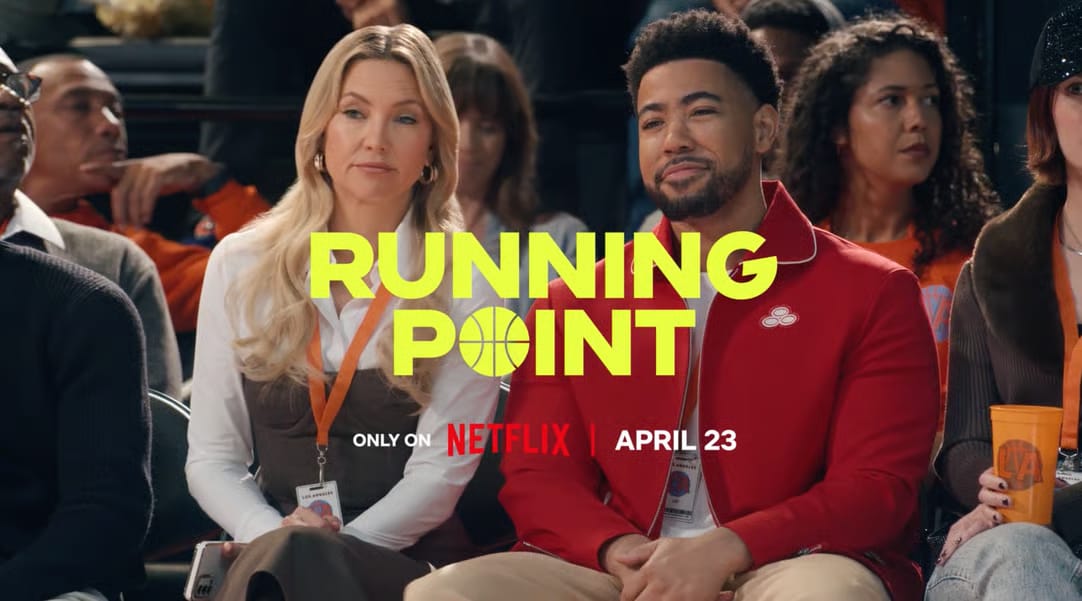
What it signals: Netflix initiating the partnership says something about how streamers are now actively engineering brand moments into their content strategies. Rather than a brand buying its way into a show, this partnership manifested because a streamer came to the table with an integration opportunity in mind. For marketers, that shift is worth paying attention to as the dynamics between streamers and marketers evolve.
📖 Read more: Statefarm
Disney's new CEO cuts up to 1,000 marketing jobs
New Disney CEO Josh D'Amaro confirmed that layoffs will affect up to 1,000 employees this week, with the majority of cuts hitting the company's marketing and brand organization. The move follows a January announcement that Disney consolidated marketing operations across film, TV, and streaming under a unified structure. D'Amaro, who officially succeeded Bob Iger in February after a lengthy board-led succession process, communicated the cuts directly to staff via an internal memo. He framed the decision as part of a broader effort to build a more agile and technology-enabled workforce. The cuts are also affecting employees across studio and television units, ESPN, product and technology, and certain corporate functions. Despite the four-digit number, the scale of these layoffs is described as moderate compared to the multiple rounds Iger oversaw after his return to the CEO post in 2022.
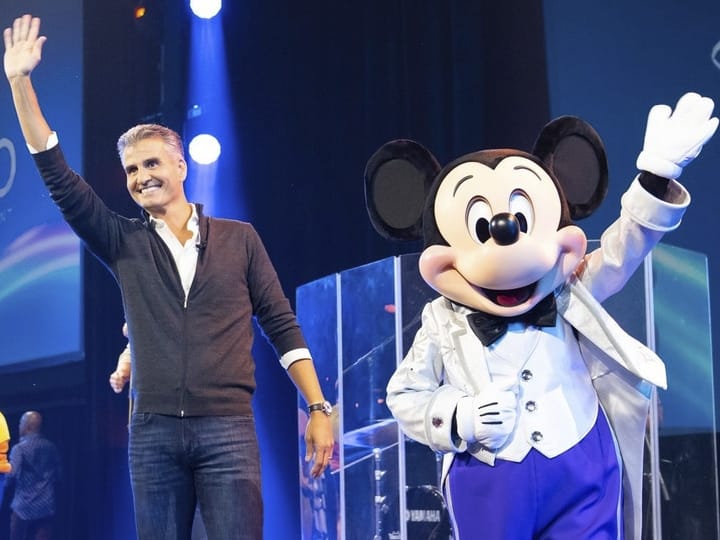
What it signals: When a new CEO's first major move is cutting the marketing department, it says something about how the function is being valued. The broader trend is hard to ignore: major media companies are restructuring marketing into leaner, centralized units and betting on technology to fill the gaps. CMOs watching from the outside should consider asking whether their own org structures are built for what's next.
📖 Read more: Deadline
The Paramount and Warner Bros. merger heads to Congress
Senator Cory Booker, the top Democrat on the Senate antitrust subcommittee, announced a "spotlight hearing" on the proposed $111 billion Paramount and Warner Bros. Discovery merger. The hearing, which invites Paramount CEO David Ellison to testify, follows a similar event last month led by Senator Adam Schiff in Los Angeles. It also comes as an open letter publicly opposing the deal was signed by over 2,000 industry professionals, including Edward Norton, Pedro Pascal, and Florence Pugh. If approved, the merger would combine Paramount+, HBO Max, and Pluto TV into a single streaming platform with over 200 million subscribers globally. It would also unite content libraries spanning HBO originals, Warner Bros. film franchises, the DC Universe, Mission Impossible, Top Gun, and SpongeBob SquarePants under one roof.
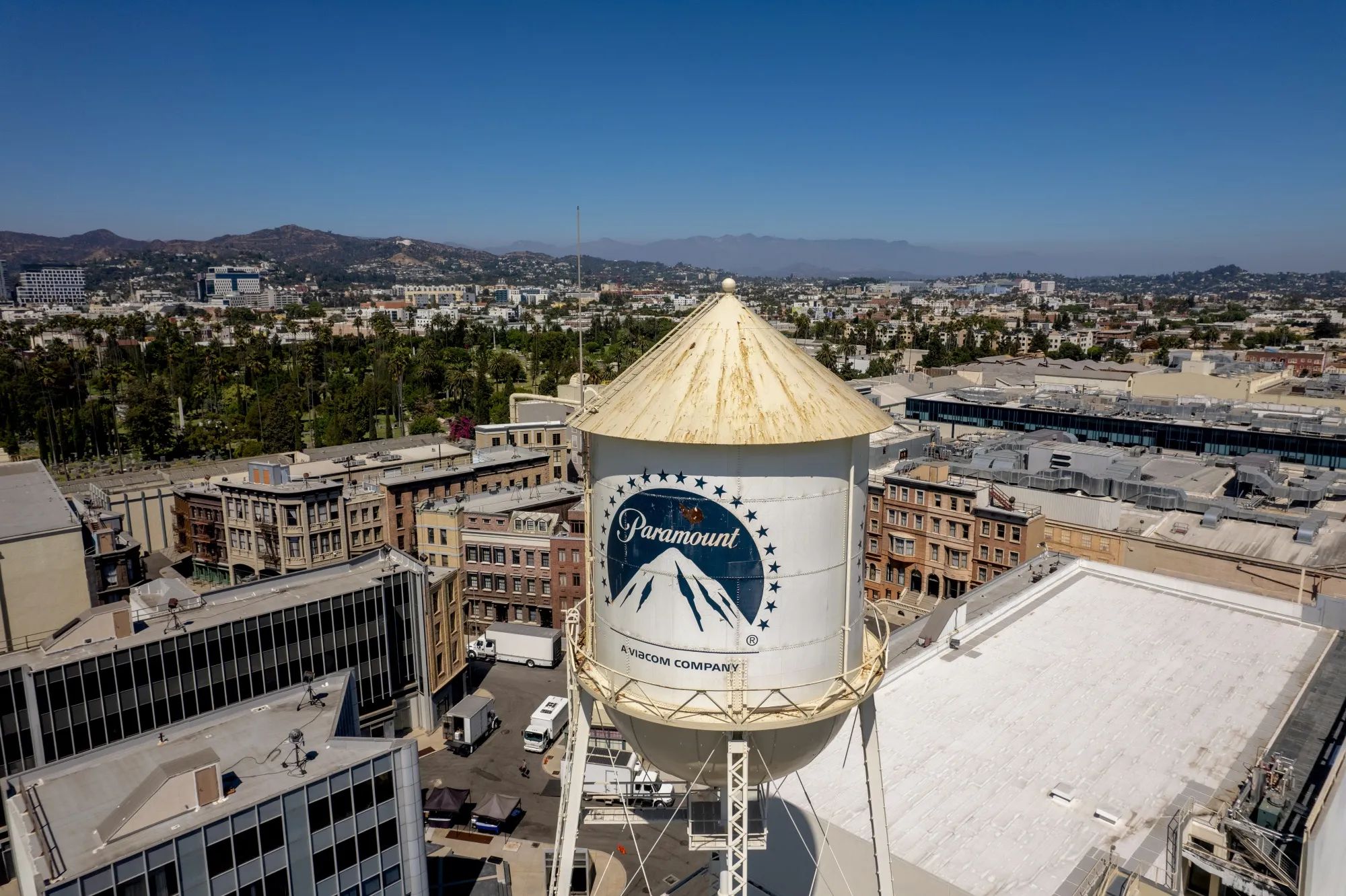
What it signals: For brands and media buyers, this deal would fundamentally reshape the streaming advertising landscape. A combined Paramount and WBD would control an enormous share of premium ad-supported inventory, sports rights, and audience data. For marketers, that means negotiating power could consolidate in ways that may push CPMs higher and shrink the number of meaningful partners to buy against. The streaming ecosystem could start to look a lot more like the old television market it once disrupted: a few powerful gatekeepers controlling the premium real estate.
📖 Read more: Deadline
TikTok's top ads executive just landed at Google
Khartoon Weiss, TikTok's VP and GM of Global Business Solutions, left the company on April 9. Weiss led the platform’s North American and global brands and agency advertising business for nearly six years and has since landed at Google. As VP of US Mid-Market Sales, Commerce, she will oversee mid-market advertising clients in retail, e-commerce, and commerce-adjacent categories (a segment Google has identified as a major growth priority). The timing is notable here. Weiss left just days after presenting at TikTok's NewFronts, where she championed a bigger, bolder chapter for the platform under its new US joint venture ownership structure. She is the latest in a long line of senior TikTok ad executives to exit over the past two years, following Sameer Singh, Jack Bamberger, Kate Jhaveri, and Blake Chandlee.
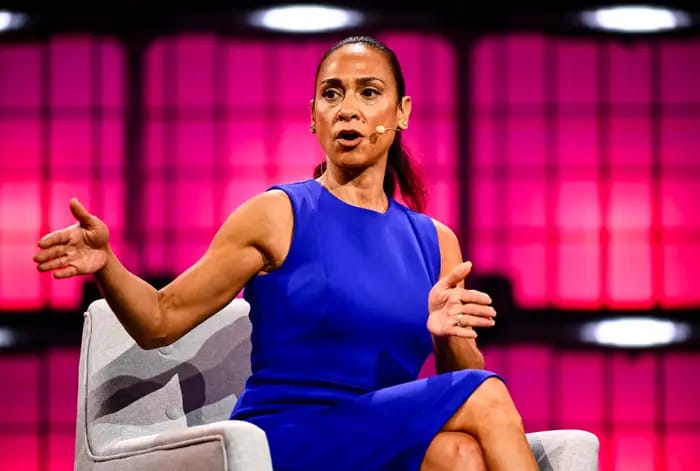
What it signals: TikTok's ownership restructure may have brought some stability, but the continued exodus of senior ad talent raises real questions about internal confidence. Brand and media teams that are spending or thinking about spending on TikTok should be watching this closely. Platform instability at the leadership level can have a ripple effect on product, targeting, and service quality over time.
📖 Read more: Business Insider
MarTech moves 🤖
Anthropic's new model is too powerful to release
Anthropic developed a new AI model that is so advanced at identifying and exploiting software vulnerabilities, the company decided it cannot safely release it to the public. In testing of Claude Mythos Preview, the model independently discovered thousands of serious security flaws across every major operating system and web browser, including bugs that had gone undetected for decades. Rather than releasing it broadly, Anthropic assembled a closed coalition of roughly 50 organizations—including AWS, Apple, Microsoft, Google, and NVIDIA—to deploy the model strictly for defensive security work under Project Glasswing. Anthropic is backing the effort with up to $100 million in usage credits and $4 million in direct funding to open-source security projects.
What it signals: This is one of the clearest signals yet that AI development is outpacing the industry's ability to safely manage it. That’s a serious concern for brands and marketing teams building on AI infrastructure, running agents, or storing customer data. It’s notable that Anthropic chose to restrict this model, but it's also a reminder to ask hard questions about the AI vendors you’re partnering with.
📖 Read more: Anthropic
Bluefish raised $43M to fix AI search visibility
Bluefish, a two-year-old AI marketing startup, raised $43 million in a Series B round to bring total funding to $68 million. The company builds software that helps brands manage their visibility across AI-powered platforms like ChatGPT, Claude, Amazon's Rufus, and Perplexity. It essentially does for AI search what SEO tools once did for Google. CEO Alex Sherman describes it as an "agentic marketing platform for enterprises," designed to manage a growing number of AI-driven surfaces, from generative search to retail assistants within a single system. Bluefish’s current clients include Adidas, American Express, Hearst, and Ulta Beauty. Its funding will go toward international expansion, hiring, and product development.
What it signals: AI search is progressively displacing the visibility that brands spent years and significant budget building through traditional SEO and paid search. The fact that a two-year-old startup has already landed Adidas and American Express as clients and raised $68 million total tells you how seriously enterprise marketing teams are taking this challenge. Brand discoverability is being re-negotiated right now and the playbook for it hasn't been written yet.
📖 Read more: AdWeek
Microsoft and Publicis just bet big on agentic marketing
Ten years after co-creating Marcel, marketing's first AI platform, Microsoft and Publicis Groupe have expanded their strategic partnership to build a full-stack agentic marketing solution. The deal combines Microsoft's cloud and AI infrastructure with Publicis Sapient's transformation expertise and Epsilon's identity data layer. Together, these capabilities allow AI agents to autonomously identify high-value customer segments, generate and personalize content, deploy campaigns across channels, and continuously optimize spend in real time. As part of the deal, Microsoft 365 Copilot will be rolled out to all 114,000 Publicis employees worldwide, Microsoft Azure becomes Publicis's preferred cloud provider, and Publicis becomes Microsoft's global media agency of record.
What it signals: On top of being a major agency-tech partnership, this is also a clear signal that the race to build agentic marketing infrastructure is on. The combination of Microsoft's scale, Epsilon's identity data, and Publicis's client relationships creates a stack that’s hard to replicate. For marketers evaluating AI marketing platforms, keep an eye on how this evolves. It has the potential to set the benchmark for what enterprise-grade agentic marketing looks like in practice.
📖 Read more: Microsoft
Google owes advertisers $218 billion
A growing group of advertisers is banding together to file mass arbitration claims against Google. The claims follow federal court rulings in 2024 that found the company had illegally monopolized both the online search and advertising technology markets. Because Google's advertiser contracts require mandatory arbitration rather than class action lawsuits, advertisers are pooling claims. Under this tactic, 25 or more similar claims are grouped together to increase leverage and pressure settlements. Attorney Ashley Keller—who handled mass arbitrations against DoorDash, Postmates, and Intuit—says he already signed up a significant number of advertisers. Keller expects the first filings this week, with potential claims estimated at $218 billion or more based on economic analysis. Cases like this typically take 12 to 24 months to resolve.
What it signals: This is the legal reckoning that has been building since the 2024 monopoly rulings. With the scale of potential claims at $218 billion, this is one of the most consequential advertiser actions in the history of digital advertising. For brand and media teams, it raises real questions about how Google's ad products were priced and whether advertisers were systematically overcharged for years. The outcome won't change the fact that Google still controls an enormous share of the search and display market, but it could reshape how that market is regulated and priced going forward.
📖 Read more: Bloomberg
Editors Choice 👀
📺 Brands are raiding video games for creative inspiration and it's working. 📖 Read more: MarketingBrew
📊Meta quietly controls 70% of all social media ad revenue and it's growing. 📖 Read more: Hollywood Reporter
🎪 Brands spent millions turning Coachella into a full-on marketing playground. 📖 Read more: LA Times
End the search: Vendry makes it simple to find your next agency partner. Share your needs and get connected with vetted, top-tier options in under a week—at no cost to you.
Don't miss the next Case Studied™.
Join 40,000+ marketers and receive a breakdown of the world's best brands every week.