The marketing moves that defined the week
Rebrands, AI ads, and an $111 billion media consolidation saga.
26 Mar 2026
The marketing moves that defined the week
Rebrands, AI ads, and an $111 billion media consolidation saga.

Case Studied Brief
March 26, 2026
Today’s Case Studied is sponsored by MarketerHire
MarketerHire allows startups, businesses, and Fortune 500 companies to hire top marketing talent in less than a week.
Case Studied Brief
Committed brands, calculating platforms
This week's Brief gets into the brands that committed fully, the platforms making calculated moves, and the continuation of an $111 billion media consolidation saga.
Sprite revamped its brand identity. A New Zealand health campaign is incentivizing behaviour. And Cardi B’s name has a new pun.
Meanwhile, X is begging advertisers to come back and Apple is opening up a new channel to advertisers.
Let’s dive in.
Campaigns of the week 📺
Sprite
New packaging, new sound, new partnerships
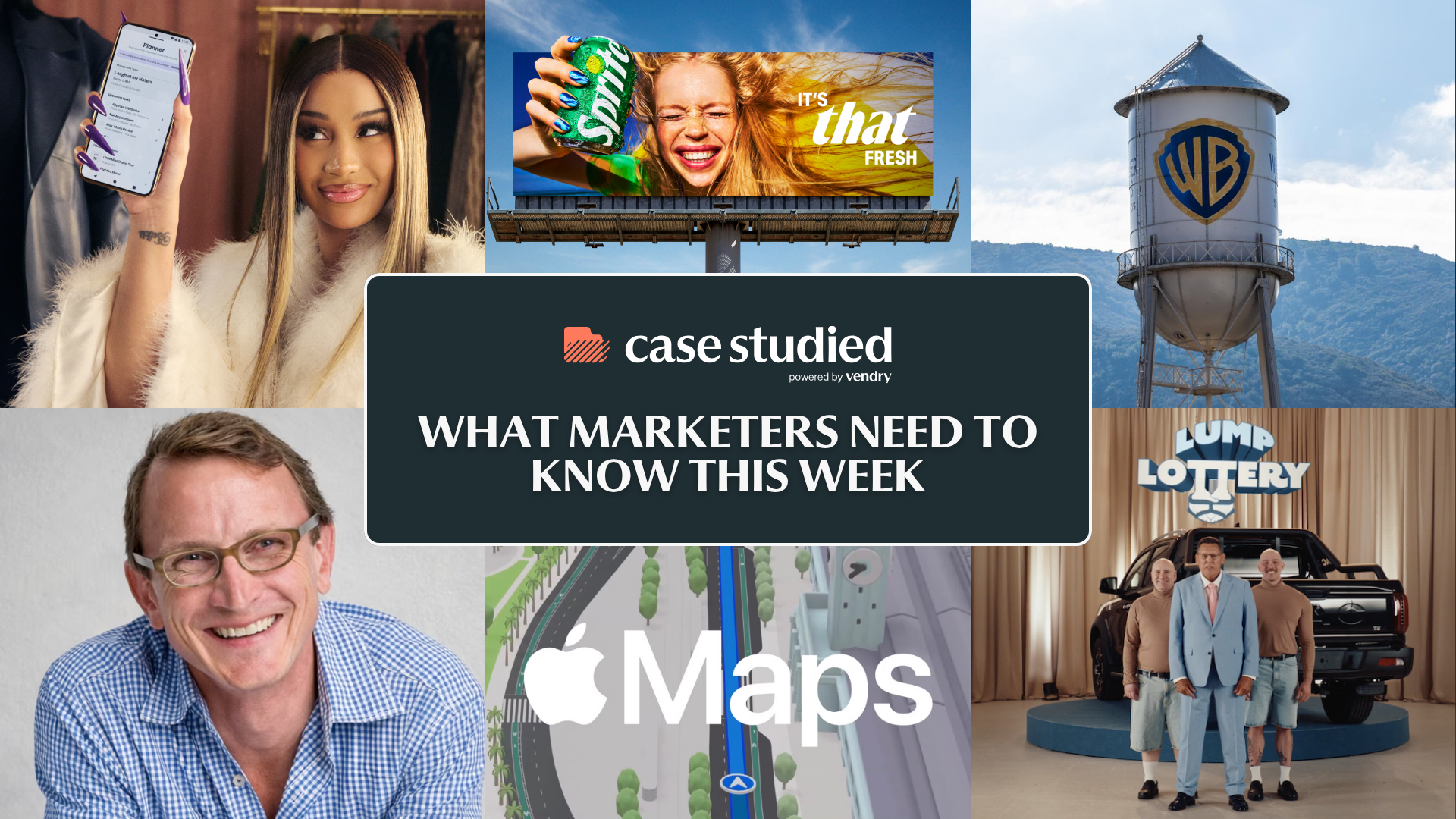
Sprite launched its new global platform, "It's That Fresh," rolling out across 180 markets. The rebrand includes the return of Sprite's iconic Lymon symbol, plus new brand audio that was co-created with GRAMMY-winning producer Mustard. The brand is rolling out its new identity with a wide range of partnerships including Crenshaw Skate Club, Takis, Tabasco, and McDonald's. It also marks Sprite's return as the NBA's official global soft drink partner.
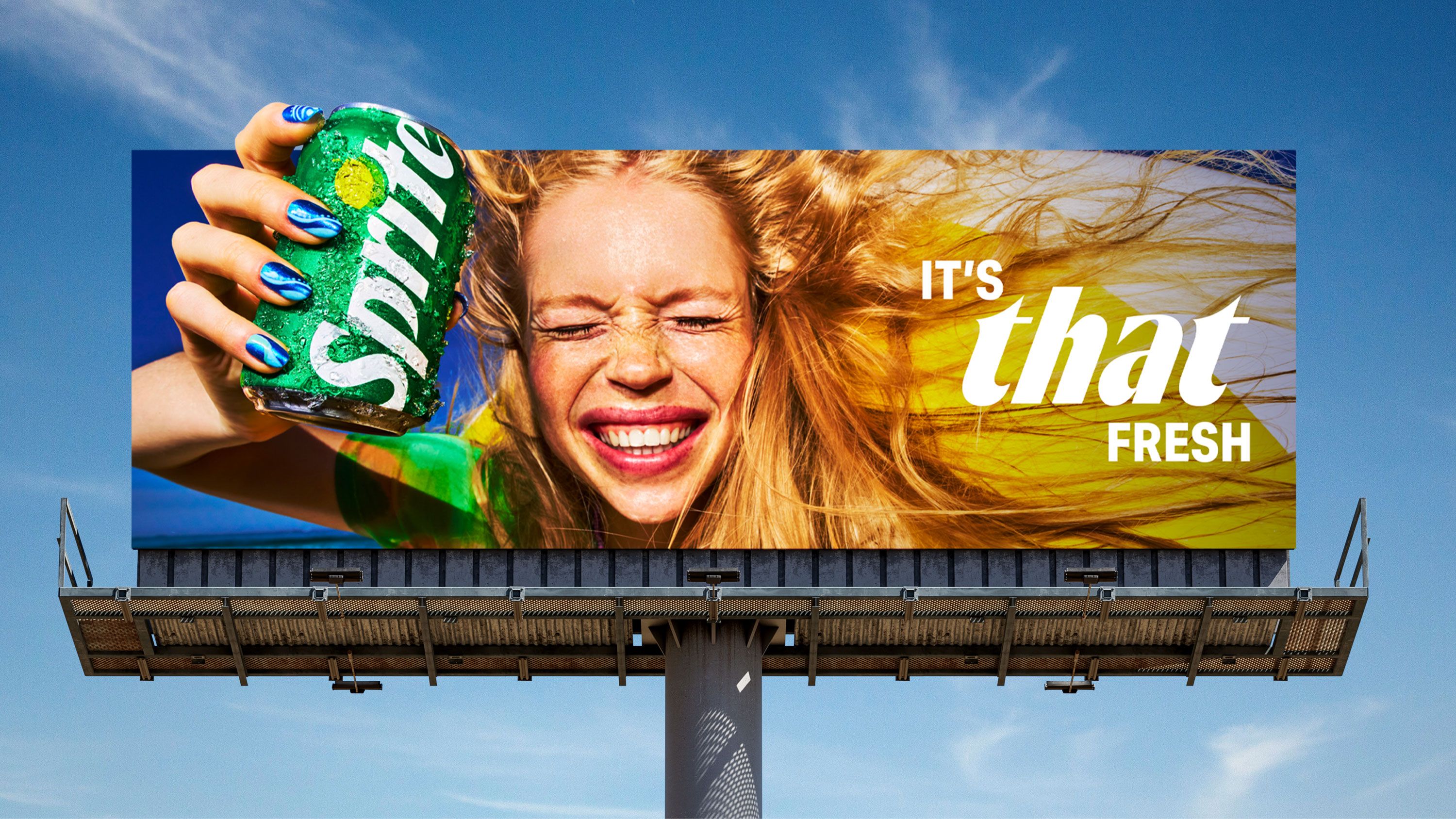
Why it stood out: Sprite surpassed Pepsi as the nation’s third-favorite soft drink in 2024 and it’s making moves to help maintain that spot. By bringing back the classic Lymon branding, it’s speaking to older audiences who remember the long-standing logo. By investing in refreshed brand audio and packaging, it’s speaking to younger Gen Z audiences. And tying it all together is the partnerships that embed Sprite into various cultural spaces. It shows the way brands can evolve in a way that doesn’t feel abrupt or alienating.
📖 Read more: Ad Age
Testicular Cancer NZ
Find a lump, win a ute
Testicular Cancer NZ, creative agency Colenso BBDO, automaker JAC, and TikTok For Good teamed up to launch "Lump Lottery." This campaign gives Kiwi men the chance to win a brand-new ute (aka a utility vehicle) just for checking themselves for testicular cancer. To enter the drawing, participants have to visit the site, go through prompts (which are unskippable) on how to self-examine, and report their result. Fronting the campaign is Sir Wayne "Buck" Shelford, a New Zealand national rugby union team legend. He’s a particularly fitting spokesperson choice: Buck famously played on after having his testicle torn open in a rugby match. The Lump Lottery campaign spans TV, OOH, digital, and social.
Why it stood out: Most health campaigns rely on fear or guilt to change behavior. But this one wraps an important message inside an alluring incentive that’s well-tailored to the target audience. Colenso BBDO’s group strategy director noted, “With this audience, we need to ensure we weren’t so earnest it scared people off, but not so preachy it put their backs up.” This campaign is a strong example of meeting an audience where they are, speaking their language, and offering a worthwhile incentive.
📖 Read more: LBB Online
Yahoo Mail
Cardi B and FOMSI
Yahoo Mail partnered with Cardi B on the campaign dubbed "Cardi B Busy." It introduces the brand’s new AI-powered feature, Planner, which automatically surfaces appointments, deadlines, and reminders into a single organized view. In a 45-second spot created with Pasadena-based Conscious Minds, Cardi B is shown struggling with FOMSI or Fear of Missing Something Important. Her manager, Patientce Foster, then introduces her to Planner and helps restore order. Yahoo is simultaneously launching Sponsored Events, a new ad format that lets brands embed timely reminders directly into users' Planner workflows. It debuts with H&R Block and highlights tax season.
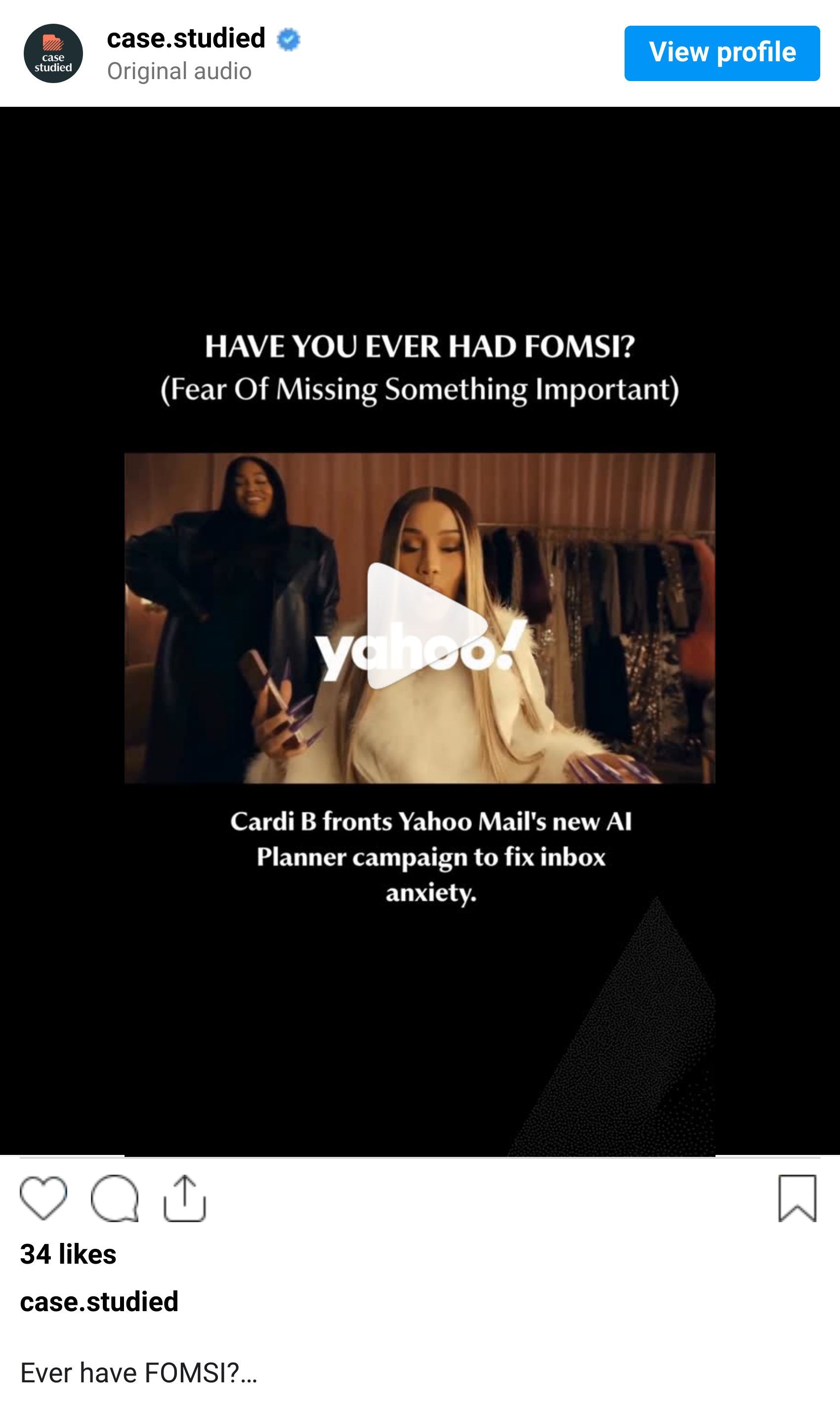
Why it stood out: This campaign effectively speaks to the emotional feeling of FOMSI. Whether or not the acronym sticks, it reframes a utility pitch as something more relatable. Cardi B adds humor and cultural relevance, while her manager’s cameo brings a layer of authenticity. It’s also worth noting the simultaneous launch of Sponsored Events. Debuting an ad product alongside a consumer campaign means Yahoo is aiming to reach two distinct audiences at once.
📖 Read more: AdWeek

You need strategic execution that moves the needle, not generalist filler. With MarketerHire, you can plug in experienced marketing specialists in days, no months.
✅ Only the top 1% pass their rigorous vetting
✅ Quick matches let you get started in under a week
✅ Trusted by 6,000+ fast growing companies in all industries
Best of all? Case Studied subscribers get $1,500 hiring credit & a 2-week, risk-free trial. So you got nothing to lose!
Industry news 🤝
OpenAI hired Meta's ad expert
OpenAI brought on David Dugan, a Meta veteran who most recently served as VP of its global clients and agencies division. With his new title of VP and Head of Global Ads Solutions, Dugan will lead the buildout of OpenAI's ads business inside ChatGPT. OpenAI was already testing an ads manager and set a $200,000 minimum commitment for brands running ads in ChatGPT. Early pilot partners include Best Buy, Expedia, and Qualcomm. Meanwhile, Omnicom, WPP, and Dentsu are lined up to test inventory. Dugan's appointment follows the hire of Fidji Simo, another Facebook veteran, as CEO of Applications.
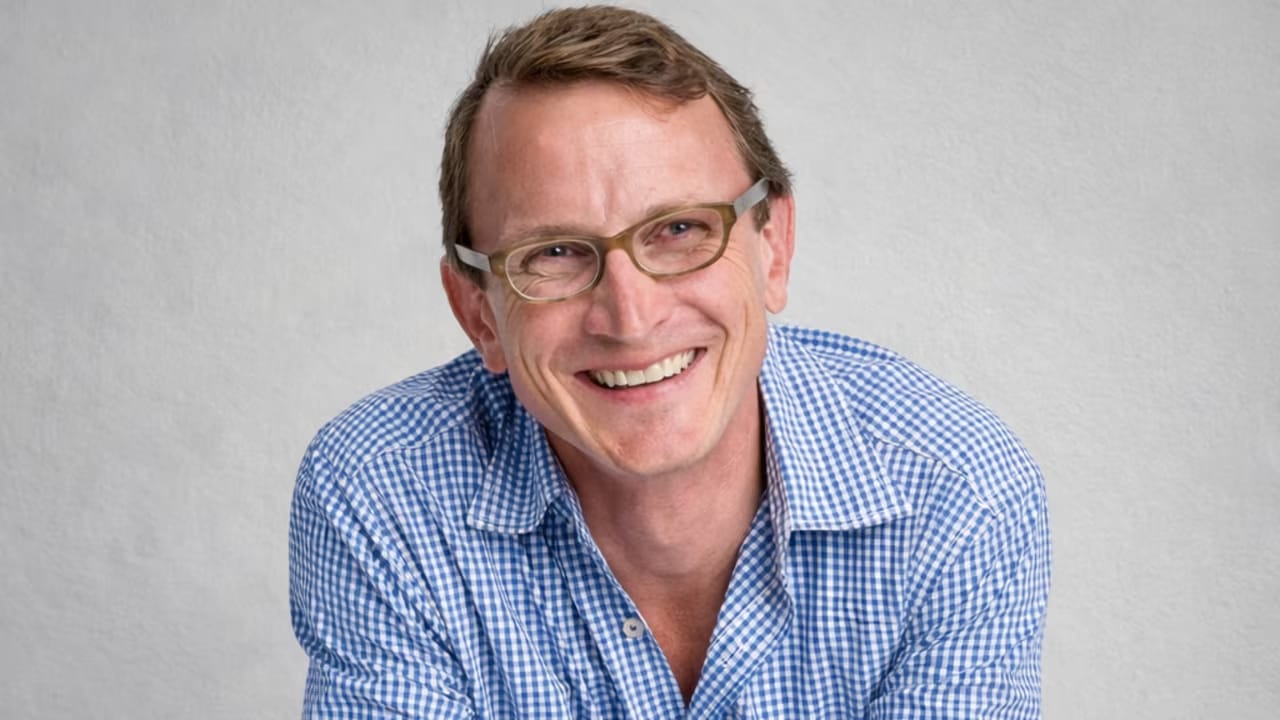
What it signals: OpenAI isn't dabbling in advertising anymore, it's moving full steam ahead in building an ads business. Hiring someone who spent over a decade at a social advertising powerhouse sends a clear message about where this is headed. Bringing on operators from big tech seems to be a deliberate pattern that OpenAI is leveraging to shape its ad revenue strategy.
📖 Read more: AdWeek
Publicis Pulls Its Trade Desk Recommendation
Publicis Groupe has officially stopped recommending The Trade Desk to its clients after an independent audit raised serious concerns about how the platform charges for its services. The audit, conducted by FirmDecisions, found that The Trade Desk had been applying fees in ways that weren't agreed upon. This included enrolling clients in paid tools without their knowledge and making it difficult to verify whether media and data costs were being passed through cleanly. The Trade Desk pushed back hard, with CEO Jeff Green denying the findings entirely and arguing the audit demanded information that would breach confidentiality obligations. TTD shares dropped more than 7% on the news. Meanwhile, Omnicom launched a third-party audit of The Trade Desk’s fees.
What it signals: WPP and Dentsu have already pulled back from The Trade Desk’s OpenPath. With this exit from Publicis, three of the world's biggest agency holding companies have now raised questions about The Trade Desk's fee practices. The deeper issue is that programmatic media buying has long operated with a level of opacity. Moments like this expose just how little visibility brands actually have over where their budgets are going. The pressure for change is mounting as the industry's largest buyers demand more transparency.
📖 Read more: Ad Age
The $111B Deal Becoming a Political Flashpoint
Seven Democratic senators sent a letter to FCC Chairman Brendan Carr demanding a full independent review of the foreign investment that’s backing Paramount Skydance's $111 billion bid to acquire Warner Bros. Discovery. The concern centres on about $24 billion in financing from Saudi Arabia's Public Investment Fund, the Qatar Investment Authority, and the Abu Dhabi Investment Authority, plus the involvement of Chinese tech giant Tencent. Paramount argued these are passive, non-voting investments that fall outside regulatory jurisdiction. The senators aren't buying this and pointed out that financial leverage doesn't require a board seat to create influence. The FCC chairman previously described his agency's role in approving the deal as "minimal," which is precisely what triggered the letter.
What it signals: With foreign sovereign wealth funds gaining proximity to wide-reaching outlets CNN, CBS News, and CNN International, questions of influence were bound to arise. For brands and advertisers whose media spend flows through these properties, the outcome of this review has real implications. Who controls the pipes matters as much as the programming running through them. Media consolidation at this scale doesn't just reshape competitive dynamics, it invites political and regulatory friction that can stall deals, spook investors, and complicate long-term planning for anyone with significant media commitments.
📖 Read more: Variety
X is offering brands $200K to come back
A leaked pitch deck reveals that X is offering advertisers up to $200,000 in added value—structured as 50% back on every dollar spent—to win back brands that pulled off the platform since Elon Musk's takeover in 2022. The deck was presented to at least one major ad agency and dedicates more than 20 slides to brand safety reassurances. It leans heavily on Grok as its answer to content moderation concerns, claiming the AI now reviews all posts on the platform for brand suitability. The pitch comes as Grok is at the centre of a deepfake scandal that triggered regulatory investigations and multiple lawsuits. X's ad revenue currently sits at roughly $1.25 billion, less than half of the $2.43 billion it generated in 2021 prior to Musk’s takeover.
What it signals: When your pitch deck involves a cash incentive and 20 slides on brand safety, it’s clear there are some formidable challenges at play. The very tool X is positioning as the solution to advertiser concerns is simultaneously the source of serious regulatory and safety concerns. This is a hard sell to make to advertisers for multiple reasons, and Musk doesn’t seem to be helping the cause. Earlier this month when he asked users if they’d ever made a purchase based on an ad they saw on X, 88% of the 1.6 million survey respondents said no.
📖 Read more: AdWeek
MarTech moves 🤖
TikTok creators are coming to your TV
Tubi and TikTok launched the Creatorverse Incubator, a formal pipeline that gives select TikTok the resources to develop original scripted and unscripted series exclusively for Tubi's 100 million monthly active users. TikTok identifies the talent, Tubi provides the creative support and distribution, and TikTok Spotlight handles the promotional push. The first cohort of creators will be announced this summer. The timing comes as Tubi is pitching advertisers at its 2026 IAB NewFront, with creator-led content playing a central role. The platform's own research shows 67% of viewers find creator content more original than traditional TV.
What it signals: This may be what the next phase of the creator economy looks like: creators getting genuine development infrastructure to make longer, more ambitious work. For streaming platforms, it offers a savvy acquisition play for younger audiences. The question for advertisers is whether the content holds up at scale and whether the audiences follow creators beyond the scroll.
📖 Read more: Tubi Corporate
YouTube Wants to Own Creator Marketing
At its 2026 NewFront, YouTube evolved BrandConnect into YouTube Creator Partnerships. It’s a centralized platform embedded inside Google Ads and Display & Video 360 that helps advertisers find creators, scale content, and measure results. Gemini AI helps brands find the right fit for a given campaign by analyzing data from over 3 million eligible creators. Then once a partnership is live, branded content can be boosted across Shorts and in-stream directly from the same platform. The results YouTube cited are notable: creator-led Shorts drove a 30% average increase in conversion lift and YouTube claims 86% higher long-term ROAS than paid social.

What it signals: YouTube is making a major play for those creator marketing budgets. By folding discovery, activation, distribution, and measurement into one place and anchoring it to Google's ad infrastructure, it's making a case that brands no longer need to accept fragmented creator tools and third-party platforms. The trust argument is real too: 78% of viewers say YouTube has the most trusted creators for product recommendations, which gives the platform a meaningful credibility edge.
📖 Read more: Youtube
Apple is opening up maps to advertisers
Apple is preparing to introduce search advertising to Apple Maps, according to Bloomberg. This move will allow businesses to pay to appear prominently when users search for nearby places—restaurants, retailers, services, and the like. The move is part of Apple's broader push to grow its services revenue, which is becoming an increasingly important part of the business as iPhone sales plateau. Apple already runs a search ads business through its App Store and generates an estimated $4 billion annually. Maps represents a natural extension of that model with significant local advertising potential.
What it signals: Apple entering into local search advertising is a shot at Google Maps and the broader local ad market that Google has dominated for years. For brands with physical locations, it opens up a new high-intent channel. An interesting long-term question is what this does to Apple's privacy brand. Search ads in Maps are inherently location-based and Apple has spent years building its identity around not tracking users the way Google and Meta do. How it squares that positioning with a monetized Maps product will be worth watching closely.
📖 Read more: Bloomberg
Editors Choice 👀
💰 ABC learns a $70 million lesson in talent vetting with Season 22 of The Bachelorette 📖 Read more: LA Times
⚽ Sports clubs are building media empires to give sponsors more reasons to sign on 📖 Read more: Digiday
🏆 Breaking a Guinness World Record is becoming a legitimate brand media strategy 📖 Read more: Marketing Brew
End the search: Vendry makes it simple to find your next agency partner. Share your needs and get connected with vetted, top-tier options in under a week—at no cost to you.
Don't miss the next Case Studied™.
Join 40,000+ marketers and receive a breakdown of the world's best brands every week.